• This article appeared in The Telegraph on August 15th, 2021

    When I am asked by family and friends what to make of the news coming out of Afghanistan, first I tell them to sit down. If they want an honest answer, it’s going to take some time.

    Then, I point to two things.

    First, the manner of the West’s withdrawal will cast a long shadow.

    We went to Afghanistan for a reason – to push back against extreme forces who wish us harm.

    The phrase ‘Global War On Terror’ never really took hold in Britain, partly due to the unpopularity of President George W Bush, but our fight against violent extremism largely amounted to the same thing.

    Now, it speaks volumes that the British government has to be pressed to meet its moral obligations to Afghans who helped our forces.

    Interpreters, contractors, other staff and their families, many of whom endured great hardship and threats, will be forgiven for wondering if they should ever have bothered trying to help Britain.

    Their treatment by Britain will also have been noted around the world as the fight against extremism continues.

    British forces are currently deployed in Mali, north-west Africa, and may soon be off to Somalia as well.

    Imagine you are a Somali national who wants to help resist the Islamic extremists of al-Shabaab. You may welcome Britain’s interest. You may long to see British troops on the ground. But if such a deployment does occur, will you decide to volunteer your services as an interpreter having seen the way Britain treated those who made that choice in Afghanistan?

    The fight against extremism is not over. The way we exit this war may already be setting the conditions for failure in the next.

    The second thing I say is that if this conflict has reminded us of anything, it is that armies do not fight wars. Nations fight wars.

    Why did we allow our politicians to become bored with Afghanistan?

    When did we let them subcontract our interest in the country to the military, in the hope of achieving a military solution without addressing the significant political and cultural factors that made the fight necessary in the first place?

    If those in positions of power are more interested in their own pockets, reputation, family, tribe or winning elections; doing what is easy rather than what is right, then the endeavour is doomed.

    As with President Biden’s decision to withdraw from Afghanistan in haste – and let’s not conflate the decision to go, which many felt reasonable, with the way that policy was enacted that has led to chaos and fear – the UK government’s attitude to the country seems to have been one of increasing apathy.

    The hard, costly and enduring efforts required to even make a start on the many ills afflicting the country were never properly addressed, which only benefited the Taliban.

    That is not to let the military totally off the hook.

    Take just one example. I’m not convinced the requirement for precision in modern weaponry should be seen solely through the lens of making it easier to hit targets with minimal ordnance.

    That’s important, of course, but have we also learned that ensuring the security of civilians and their livelihoods is the greater win?

    Alienate the population: local, regional and global, through bad politics and careless acts and you will watch the legitimacy for your cause bleed away, like so much other blood soaked over two decades into the sand and dust of Afghanistan.

    I say all that and then leave my, by now slightly shell-shocked questioner, with one final thought: There’s going to be more of this, you know. How certain are you that we’ll do it better next time?

  • Ten years ago this month I deployed to Afghanistan on my last operational tour as a British army officer.

    Nothing on that tour was any more dangerous or troubling than anything else I experienced in my career, but even after a decade it still sticks out as one of the most intense periods of my life. 

    I left the army five years after Operation Herrick 13. Transitioning back to civilian life has not been without its difficulties.

    Home life was fine, as was becoming a father, but work felt flat and directionless. I struggled not to react to behaviour and values at odds with those of the close-knit teams I was used to in the army.

    I eventually spoke to a counsellor. It seems that after 23 years in the army I am very drawn to risk, adrenaline and conflict.

    Perfect for a defence correspondent, or a nightmare for an editor?

    Am I missing the single-minded focus of operations? Are the characteristics that enabled me to thrive in the military utterly incompatible with civilian life?

    I thought I’d better ask those that were in Afghanistan at the same time as me.

     Johnny Mercer, veterans minister, 39, said he was “still adjusting every day” to life after the intensity of combat.

    The minister, who served three tours of Afghanistan, overlapping with me on the last one, said deploying on operations “makes you realise how so much of life comes down to luck.”

    “You could be patrolling next to a guy and a random burst of gunfire hits him, not you. How do you rationalise that? You can’t.

    “It makes you lose your fear. Now, I’m not worried about not being liked, but I worry about other things around family life. I get annoyed when the kids argue about which breakfast cereal to buy. It’s stupid stuff like home insurance that keeps me awake nowadays.”

    Toby, another friend, said he reflects a lot on his military service, particularly the “very clear purpose” of our tour in Afghanistan.

    “We all knew what we were pushing towards. That’s something that doesn’t often exist away from that environment. That makes working with people much more difficult.

    “It’s rare to find that common cause. That’s when I feel like I’m on my own or I’m pushing against people.” 

    He looks back on the decisions he made during the operation. “I constantly question: ‘Was that the right decision?’ I know at the time it was right. I made all of those decisions without doubts at the time. With the benefit of hindsight and mature consideration, I wonder: ‘Did I convince myself that was right?’ That plays a bit more on my mind.

    “Is it guilt? Is that the right word? There were things out of my control that went wrong, for which I have massive regrets.

    “You’re young, you’re part of the big machine, are you really doing the right thing as opposed to doing what you always do?”

    I don’t know if he is describing guilt, doubt or healthy self-reflection. What I do know though, is that a man who considers these thoughts a decade later, who examines his actions and motivations, is absolutely the right person to have been placed under such pressure in the first place. 

    The strong moral core that I remember so well, as tough as the Aberdeen granite near his home in Scotland, is still very much in evidence. So is his sense of mischief.

    “To be out on a limb, on your own, is exciting. That’s the thrill of soldiering.”

    For those who take their responsibilities seriously, being part of the ‘big, green machine’ can be an additional source of stress. There is only so much an individual can do. 

    Operation Herrick 13 was Matt’s fourth tour of Afghanistan.

    He says the lack of consistency in the strategic approach to the war over the previous five years had been “devastating on my morale”. 

    “Objectives and plans that were bought with the lives of soldiers were discarded months later, not to mention the fatigue and wariness of the Afghans as they once again changed tack to support the new Task Force’s plan.”

    However, he says the “air of positivity” in the deployed force was infectious and he looks back on his time in the country “with immense pride”. 

    “The ability to keep going and achieve things not thought possible was inspiring. Every set-back was met with greater desire to overcome the challenges. A few weeks in such an environment really is akin to years of routine work and life, and that’s something I miss.”

    Our conversation has a sting in the tail: “Last year I had dinner in London with an Afghan I worked with there and asked if the place was better than before we went,” Matt says. “He did not answer.”

    It does not surprise me how so little of the stress my friends describe comes from enemy action. Most is rooted in self-induced or system-induced pressure.

    Tom, an Apache attack helicopter pilot, told me: “I think of those six months a lot”. 

    “Of all the events in your life, going to war is always going to feature as one of the more significant. I don’t think it changed me, but it certainly affected me.”

    Discussing that tour will trigger “replays” he says. “I will not sleep well for a few nights.”

    “It’s the same if anyone asks me a serious question. The intensity and immediacy of my reply surprises them and generally causes me a period of preoccupation until the thoughts and memories settle back to their rightful places.

    “A source of enormous stress for me was my chain of command which… on one significant occasion threw me to the lions. Justice was sweet, the enquiry which followed was confused as to what the alleged issue was and [they] congratulated me on a job well done. 

    “This one incident and the anger and disbelief that came from it still lingers.” 

    He remembers what he calls his “bad judgements”. I would say they were decisions taken with the best of intentions, given the situation and available information at the time.

    He describes escorting a Chinook helicopter carrying the Medical Emergency Response Team (MERT) to collect an injured American soldier. The wounded man was collected and the helicopter headed to Camp Bastion, the main British base in the area where specialist medical facilities were located. Tom’s Apache, call-sign UGLY FIVE ZERO, peeled off to attack a High Value Target (HVT) that had just been spotted. 

    “The Americans called up again to say they had another casualty coming to the same Helicopter Landing Site (HLS) and could the Chinook come back? I decided not to call the Chinook back, thinking it better not to extend the flight time for the first casualty, but told the Chinook to drop off and come back for the second casualty.  

    “The delay was long enough for the second casualty to bleed out on the HLS and become a Hero (a US Marine Corps term for a dead marine).”

    Tom remembers the radio call vividly: “UGLY FIVE ZERO, this is EL ZEE 77, casualty two is now a Hero, no need for the MERT, we’ll send him back on this evening’s resupply flight.”

    “A sandstorm prevented me from making any useful contribution to the HVT engagement. I didn’t help anyone that day.”

    At other times he would race towards a location where troops were in contact with the enemy. 

    Dialling into the radio frequency of the soldiers under fire he would often hear instant screaming and uncontrolled shouting. 

    “UGLY FIVE ZERO we’re f****** going down, you better f****** save us, just f****** shoot the b*******!”.  

    “The background was generally punctuated with clicks, whizzes and thuds of incoming rounds lacking the boom of outgoing fire. 

    “The words: ‘FOXTROT42, we have you visual, we have 1400 rounds of 30 mil cannon, four hellfire and three hours play time, just talk us on to him or tell us where we can put warning shots’ tended to calm the situation.

    “If that all worked, and you dug them out of the s***, the sense of elation was huge. The best was when the JTAC (Joint Terminal Air Controller – the person on the ground directing fire from fighter jets and helicopter gunships) in question came in through Bastion on R&R and popped in to say thank you. Those moments were powerful.

    “Back home I didn’t communicate well. It was only when, a year later, sleep became interrupted and tears were unexplained that I put my hand up. 

    “The team at Colchester mental health unit were the best. The cognitive therapy seemed a bit quirky for an alpha soldier but I gave it a go and it certainly helped.”

    A lot of my friends say it is sometimes difficult to relate to others without similar experiences.

    James speaks most openly about that time with people he served with, sometimes to his wife’s annoyance. 

    “They’re the ones that you trust, the ones that you listen to. They’re the ones who understand your context. You can’t say: ‘You wouldn’t understand’. Of course they understand, they were there with you.”

    He says he was “twitching” on his return from Afghanistan. The troops under his command suffered 18 per cent life changing injuries on that tour but he managed to bring everybody home. 

    “I wasn’t expecting to,” he says. “You know everybody’s name, the names of their kids. You feel the ownership of all that.”

    However, speaking later to injured soldiers that had served in his squadron, either in rehabilitation units or at home undergoing long-term medical treatments, was hard. 

    “The lights had gone off behind their eyes, because they’re clinically depressed and they’ve been told their careers are coming to an end. 

    “I was being treated for PTSD [and] the thing that really bothered me was that feeling of responsibility for people I really gave a s*** about and the unwillingness to put that down.”

    He set up Mission Motorsport, a charity that uses the automotive industry to help those affected by military operations. He says it is the “dividend” borne of the profound trauma he experienced.

    “It’s no longer so visceral. It fades and that’s ok. It’s natural to be shaped by the things you’ve experienced, it would be inhuman if you weren’t. Herrick 13 was a traumatic event in the lives of many people who were on it.”

    James says it is not always helpful to follow ‘post-trauma’ with ‘stress disorder’ and that by viewing these experiences instead through the lens of post-traumatic growth “you can be better as a result of these things”.

    “You can be more balanced, with a broader world-view. You can be more patient. You can hold your family more dearly. You can care more about the plight of other people. You can be a better individual.

    “I firmly believe post-traumatic growth is something we should be promoting in our people.”

    Josh Goldberg of the veteran-led Boulder Crest Foundation, based in the US state of Virginia, says focusing on post-traumatic growth, rather than a specific diagnosis of PTSD – which many people may not suffer – is a better way to help individuals who have experienced extremely stressful episodes in their lives. 

    Post-traumatic growth, a term first coined in 1995 by Dr Richard Tedeschi of the University of North Carolina, suggests that an individual’s struggle to make sense of life after a trauma often causes changes that enable their lives to be “more authentic, fulfilling and purposeful” than before, Mr Goldberg says.

    “It’s not that trauma is good, it’s not, but it’s also inevitable in all our lives, especially in the warrior class – people who sublimate instincts of self-preservation to protect and serve other people – and you will encounter trauma on that journey.”

    The intent of creating a diagnosis of PTSD, so that treatments could be better directed, was sound, but the label has overtaken the purpose. 

    The core symptoms of PTSD – hyperawareness, intolerance to mistakes, a sense of numbness and disconnection, being quick to anger – are all helpful self-preservation tools for a soldier on a battlefield, but do not translate well to life back home.

    Some veterans struggle to get past these feelings to the idea that “something good can happen next, or that their experiences may have value and not just be a dark period that I hope to never revisit,” Mr Goldberg says.

    “The question is: Are you struggling because of what you’re coming back from, or what you’re coming back to?

    “They have to grapple with the randomness of life, the fragility of it all. The seeds are planted for post-traumatic growth in a warzone, but if you don’t nurture them you just tear them out.”

    He cites the example of the 591 US prisoners of war from the notorious Hoa Lo prison, immortalised as the Hanoi Hilton, during the Vietnam War. 

    Released in 1973, some after nearly nine years’ captivity, the men’s families were warned to expect psychotic and infantile behaviour. Instead, a study a year after their return found that 80 per cent of the men were emotionally stronger than before their capture. 

    “It was a crucible experience. No mental health professionals, just guys having to figure it out.

    “These fighter pilots didn’t aspire to get shot down, that wasn’t the plan! Yet somehow they had the wherewithal to say: ‘This is the fate I’ve been dealt and it will make me, not break me’.

    “Post-traumatic growth is both a process and an outcome.”

    In the decade since I served in Afghanistan I’ve learnt two big lessons: to reflect, to set that period in the correct context, and try to learn from the experience. Anything less is a wasted opportunity at best and potentially damaging at worst. And to not be afraid to seek help, even if that’s just talking to your idiot mates.

     “Don’t ever be shy of getting help,” Tom, one of my oldest friends, agrees.

    “Better still, get help as a matter of course before you need it.”

    This article first appeared in the Telegraph on Saturday October 31st. Reproducing here to (hopefully) reach a wider audience.
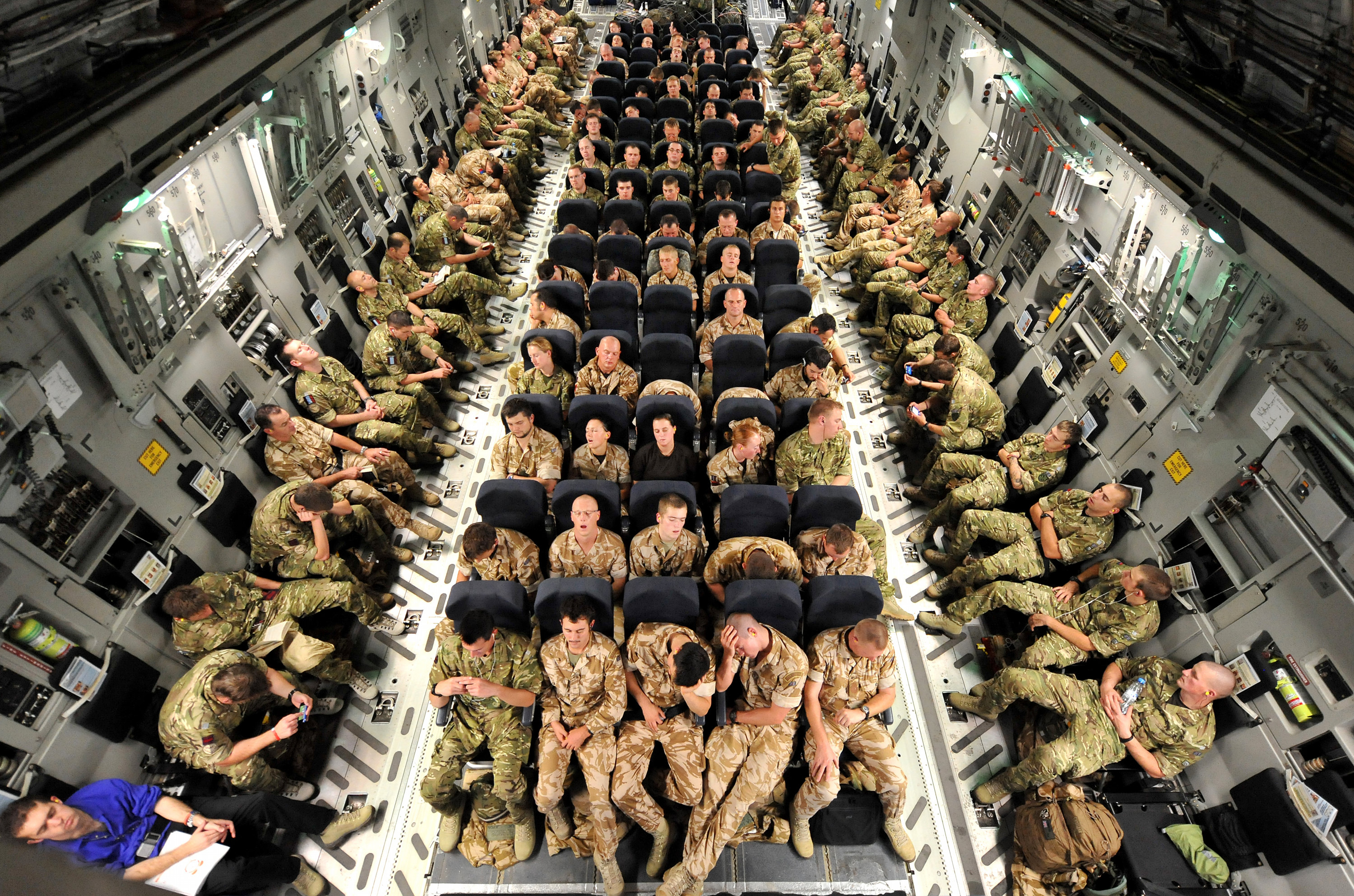
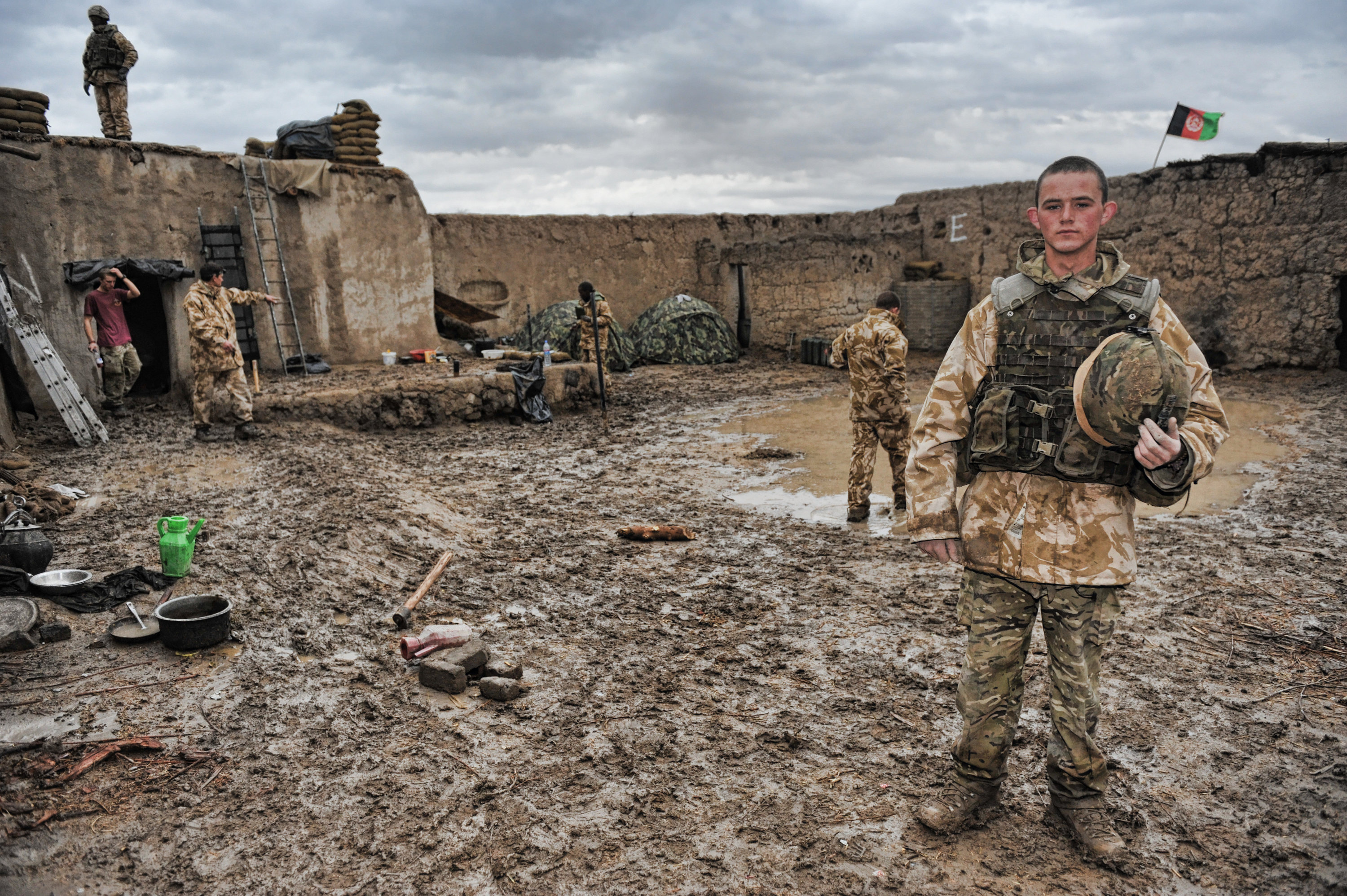
  • In the centre of the base here in Lashkar Gah is the NAAFI, the Navy Army Air Force Institute. Established in 1920, the NAAFI provides basic recreational facilities to the military world-wide and, whilst not exactly Starbucks, is a good place to have a few quiet minutes with a coffee. In Afghanistan it serves as the main social hub of the base where a brew with your mates is a major highlight of the day.

    A lot of the NAAFI staff are ex-servicemen so I was surprised recently when one didn’t answer back to a soldier he was serving who flew into a rage about civilians in a combat area, the war in general and how squaddies get a tough time while NAAFI staff remain nice and safe in base. The NAAFI chap kept calm and explained later that he’s used to the occasional blow-up from troops letting off steam, with most of them returning later in the day to apologise. He also said that quite a number seek him out for a chat, seeing him as a ‘normal’ bloke and enjoying a brief spell away from the military. Welfare provision to the forces takes many forms and the pressures out here on the fighting troops are sometimes overwhelming, so as one man may go to the chapel on base to rest his mind, others choose to chat to the NAAFI staff. Both work in mysterious ways.

    This will be my last letter to you as we are approaching the end of the tour in Helmand. Home soon, but it is unwise to shift the focus just yet. The time has gone quickly, for us at least, the families back home will have a different view. The military works hard to support the families and has to tread a delicate line between those for whom there can never be enough information and those who want nothing to do with the army or to be reminded of the environment their loved ones are in. It’s tough for those we have left behind and having gone through it myself when my wife deployed I know how dislocated the world feels, with your mind permanently in two places at once. One becomes acutely aware of time – the hour, the half-hours – because that’s generally when news bulletins occur on radio and TV. It is impossible to stop listening out for “…a British soldier was killed today in Afghanistan…”. That’s why they always end the reports by stating that the next of kin have been told; it’s not news, it’s a message to the other families.

    In many ways we were the lucky ones: training together, deploying together and supporting each other throughout. Out here you’re in a bubble, completely divorced from normal life in the UK and the self- centred laziness and petty annoyances one occasionally experiences. A soldier’s life on an operational tour is uncomplicated precisely because the stakes are so high – literally life and death – rather than in spite of them being so. There’s room only for the things that matter: family at home, the job and the blokes out here. You understand loss. Question: is it better to lose a mate in the first week of tour or the last? Think about that for a while and you’ll come close to understanding how a soldier feels about war. You are judged according to a different code with words like honour, pride and integrity and it is easy to understand why the profession of soldiering has endured throughout history. There is much about this place I will miss. Like the NAAFI manager talking quietly with a soldier, war brings out the worst in some but the best in many. Perhaps that’s why we do it.

    In memoriam: Corporal David Barnsdale, Private Mikkel Jorgensen, Sapper William Blanchard, Ranger Aaron McCormick, Lance Corporal Jorgan Randrup, Guardsman Christopher Davies, Private John Howard, Corporal Steven Dunn, Warrant Officer Class 2 Charles Wood, Private Joseva Vatubua, Private Samuel Enig, Private Martin Bell, Ranger David Dalzell, Warrant Officer Class 2 Colin Beckett, Private Conrad Lewis, Private Lewis Hendry, Lance Corporal Kyle Marshall, Lance Corporal Liam Tasker, Lance Corporal Stephen McKee, Private Daniel Prior, Major Matt Collins, Lance Sergeant Mark Burgan. This article first appeared in the Bildeston Bugle in March 2011.

  • BOY SOLDIERS ON THE FRONTLINEAs well as the British military headquarters, Lashkar Gah is also home to the Provincial Reconstruction Team, the joint UK and US governments’ civilian department working with the Afghan government on economic development, reconstruction, governance and rule of law structures. Their existence is more comfortable than the military’s when it comes to accommodation, working hours or being shot at, but they generally serve longer than the military in Afghanistan, with all the privations that entails. A big advantage of being co-located with the PRT is that the company running the contract for feeding Lashkar Gah gets extra money from the UK government for the civil servants. As a consequence the food here is excellent and a world away from the ration packs the soldiers out in the patrol bases live with.I was queuing behind two soldiers who were passing through Lash recently, when one turned to the other and remarked, “how the other half live, eh?”. I smiled to myself. It’s important for the soldiers living with the increased threat out in the patrol bases to draw strength through adversity and consider themselves different from us base rats in our supposed Ivory tower. I’m happy to be thought of as a soft-palmed staff officer, at greater risk from paper cuts than the Taliban, as long as it keeps the blokes sharp out there, and the other half keep living.

    Theirs is an austere existence: washing their clothes by hand (or cement mixer if they’re lucky) and using specially designed disposable foil bags stretched over a wooden shelf-like construction for lavatories, with one lucky fellow burning the lot each day. They shower infrequently – they are issued equipment to hang up and wash under, but have no means to heat enough water and rarely enough to spare anyway. Groin, feet, teeth, armpits, are the priorities when water is scarce.The kit we’re issued has had to keep pace with the demands of both the enemy and the climate. The issued underwear contains an anti microbial element to allow prolonged wear over a number of days and extra thick chemically treated silk layers to provide ballistic protection and minimise internal injuries or infection in the groin and stomach cavity from dirt thrown into the body following an IED blast. Armoured underpants sound like a joke but they work and are popular with the soldiers having been perfected through combat, which is both a good and bad thing.

    The British public mainly have to rely on the media for news and information about the other half serving out here. We see a huge number of journalists flowing through Helmand and it is amusing, enlightening and disappointing in equal measure to then read their copy and their interpretation of events, especially when you know the individuals. Much stands in contrast to our own experience, with a propensity to favour the violent and graphic over a more measured and broad ranging approach. I have rarely seen reporting on political, economic or social developments – positive or negative – that dig beyond the obvious, despite these being important and accessible issues for all visitors to see. There are, of course, exceptions, and some really good reports that accurately and concisely highlight the little known stories that track the deeper currents of the situation out here. (Try Googling ‘Afghan Elvis’ and notice how different papers report the same event.)

    A story was recently printed that read more like a Boys’ Own Adventure than a news report and as I was with the unit involved that day I could make a direct comparison with reality. I accept I may be inoculated against the drama of Helmand, but is it news that there are firefights, explosions and bombs dropping out here every day- it is a war after all? The journalist was asked why he had chosen the obvious story of destruction rather than taking the opportunity to report anything deeper or more challenging. His answer? “Reconstruction doesn’t sell copy.”

    This article first appeared in the Bildeston Bugle in February 2011.
  • 16x-2011-TFH-045-110Military bases are characterised by very straight lines and ours in Lashkar Gah is no exception. The accommodation tents, cookhouse and office areas are pitched in neat rows with the plastic decking used as walkways in between ramrod straight. If the army has been given a very small area in which to live, work and fight, then every available square inch has to be used in the most efficient manner, and the only right angle is exactly that. The outer perimeter is made up of huge protective barriers filled with stone and covered by guard towers and firing points. All very effective, but meaning the usable area inside is slimmed down even further. Any wasted space means less room to live comfortably or a tighter turning circle for the vehicles. It also means less room for the helicopters to manoeuvre and the one thing you don’t want accidentally knocking into walls or tents is a helicopter rotor blade. This happened a few months ago and collapsed a sangar on top of a soldier tragically killing him; one of those awful accidents that occur when men and machines co-exist too closely.

    The demands of living inside such a rigid environment can be claustrophobic for the soldiers and it is not unusual to see flashes of ill-discipline masquerading as bids for individuality. Dress regulations are often tested, issued kit is occasionally spurned in favour of self-purchased items and hair grows wildly out of control. All boring, minor challenges to authority, but the precursors to a wider malaise if left un-checked. The British Army’s reputation in the eyes of the Americans took a significant hit in Iraq, on occasion coming across as scruffy unprofessional mavericks, and if it hurts reading that, imagine what it was like hearing it from our US partners. It doesn’t happen in Afghanistan.

    The embodiment of the un-straight line, the playfully excitable and utterly individual is an animal. Soldiers see in them everything the military in combat is not: a random, carefree innocence with a complete lack of awareness of the dirt, loss and drama that characterise war. The independent nature of the scrawny camp cats in Lashkar Gah has earned them many fans as they catch the vermin that would otherwise spread disease. They are regularly seen being petted, or more worryingly, drinking from the standpipe that delivers our drinking water. But the soldiers’ real soft spot is reserved for the dogs. We have a team of Ammunition and Explosive Search dogs that patrol the camp seeking out anything that may have been smuggled in. Springer spaniels always seem to see the amusing side of life and this gang is no exception. Their tails are permanently spinning in a frenzy of barely controlled excitement as they are directed to clamber on roofs, crawl under vehicles and generally charge about the place looking for mischief. Their frivolity and impetuous manner stands in contrast to the big Belgian Shepherds, the Malinois breed, specifically bred and trained to go out with the troops and search for IEDs – Improvised explosive Devices – which are usually buried underground and rigged to explode when the victim steps on it.

    Oddy was just such a victim, but Oddy was a dog. His handler isn’t sure what he did wrong but one moment he was there, clearing a route for the men following, and the next he was dead, in all likelihood having stepped fractionally outside the safe lane he had cleared and onto the pressure plate of an IED. The issue of animals in combat is emotive and divisive, but there is no doubt Oddy and his breed save lives. I won’t divulge the technical reasons, but if it hadn’t been Oddy then a man would have died that day, of that there is no doubt. Does that make a difference? Oddy had no choice and even though these animals clearly enjoy their lives and are loved, they don’t get a vote. But they do get to do what comes naturally to them, to the best of their abilities and with maximum encouragement. Perhaps that’s not a bad life, even with the risk?

    Oddy’s team had a service for him, following which he was cremated. His ashes were taken in an urn to rest at the Defence Animal Centre in Melton Mowbray, Leicestershire. There’s a memorial to Animals in War on Park Lane in london. They also serve, just with their tongues hanging out.

    This article first appeared in the Bildeston Bugle in January 2011.

  • UK ENGINEERS PROVIDE DECISIVE POWER TO KANDAHAR OPERATIONThe dust in Helmand is unlike any I’ve ever come across before. As soft as talcum powder, it floats on the air like smoke, coating every surface. Even the leaves on the trees have the soft brown veneer which seems to be the dominant colour in this part of Afghanistan. The land near to, and irrigated by, the River Helmand is called the Green Zone, and it is, compared to the desert just a few kilometres away from the water. But the dust doesn’t let it feel very green.

    In the summer the crops stand higher than a man and the fields are a maze of confusion with visibility reduced to just a few feet in every direction. It’s a haven for the enemy, dashing in to fire on the soldiers who lose all their numerical advantage when they can’t see each other. A rifle is not the ideal weapon amongst the crops as it is designed to hit targets hundreds of metres away in a very flat trajectory. To counter the hidden enemy the army has had to re-introduce shotguns onto the front line in order to blast as much metal into the air in a broad spread as quickly as possible. Shotguns were last used in the anti-personnel role in the jungles of Malaya in the 1960s. Modern technology will never trump a timeless, simple solution, and a shotgun in the steady hands of a cover man stalking through the green zone is certainly that. Crude, but effective; a soldiers’ answer.

    It’s winter now and the crops have gone; advantage us. The rules change and the enemy retreats behind his Improvised Explosive Devices or IEDs, the inaccurately named road-side bombs. Inaccurate because they can be anywhere: roads, paths, walls, streams. They took on an almost mythical, boogie-man status, at once invisible, indiscriminate and unbeatable. For a couple of years we allowed them to dominate us and we wavered, unsure of ourselves as an army and as a nation. Make no mistake IEDs are killers, brutally effective. The US Marines had a terrible day recently when four soldiers were hit by IEDs, all surviving but losing eleven limbs between them. Eleven. One of our soldiers stepped on an IED yesterday but it didn’t explode properly and only broke his ankle. I wonder how he’s feeling today.

    IEDs shook the army more than any issue I’ve ever seen before. But cool heads steadied the ship. We learnt to deal with this threat, to stare it down and give confidence back to our people, out there every day placing one foot in front of the other. IEDs are made by men; the attacks planned by men. And men make mistakes. We’ve learned from our enemy, we understand him and think like him, grudgingly respect him. So we turn his mistakes against him and are better able to defeat him, and his IEDs. And we do, everyday, finding more than go off, and those that do explode do so mainly against our armour that, finally, is up to the job. We’re not there yet, but IEDs are no longer the phantoms they once were; they fear us now. That’s a good way to finish the year. We won’t make a big deal of Christmas. A time to celebrate will come, but for now the focus has to be on the job. The generosity of the British public in the parcels and messages they send out to us is humbling. So we’ll pause, briefly, then crack on. But I do wish you all a very happy Christmas and New Year.

    This article first appeared in the Bildeston Bugle in December 2010.