• With special access to people close to Loyalist paramilitaries, The Telegraph was told Northern Ireland is a ‘matchstick’ away from eruption

    This article appeared in The Telegraph on May 12, 2021

    There is a violent, perfect storm gathering over Northern Ireland.

    Among hardline Unionists in the Province, the anger is clear, the tension palpable.  

    “The IRA have got what they wanted by bombing and murder. We don’t want to go down that route, but is that the only option for us?” says Stephen, a Loyalist community worker close to North Belfast Ulster Defence Association (UDA).

    “London needs to know there’s a new generation that is so angry and bitter you can cut it with a knife. This is the biggest threat to peace there’s ever been.”

    The Telegraph was given exclusive access last week to people close to the UDA and two other Loyalist paramilitary groups, the  Ulster Volunteer Force (UVF) and Red Hand Commando.

    The groups have issued a chilling warning:  Northern Ireland is “a matchstick away from being ignited”, accusing Boris Johnson of “selling us down the tubes”.

    The anxieties and the problems are clear.

    First, the customs border created by brexit in the Irish Sea has driven a wedge between Northern Ireland and mainland Britain, and a real sense that hardline republicans in Sinn Fein and its one-time military wing the IRA have won.

    Next, the failure to prosecute Sinn Fein leaders who broke Covid-19 rules last year to attend  the funeral of Bobby Storey, the terrorist group’s ‘brutal’, one-time head of intelligence, continues to cause a bitter outrage.

    Meanwhile the Unionists are in turmoil with Arlene Foster forced to quit as leader of the Democractic Unionist party (DUP) and First Minister. A new leader is due to be elected on Friday. 

    Added to the heady mix is the pursuit in Belfast courts of Army veterans accused of murder during the troubles while IRA terrorists received ‘comfort’ letters, and it feels like all the hard work of the Good Friday Agreement is unravelling. And fast. Security sources fear the peace deal is facing its greatest threat since its signing 23 years ago in 1998.

    “This community has gained nothing from the peace process. Nothing,” says Dean, a Loyalist community worker close to North Belfast UDA.

    He said the area of Tiger’s Bay had gone to “wrack and ruin” since the Good Friday Agreement.

    “Boris Johnson has sold us down the tubes and he’ll regret it. He’s seriously misunderstood this.” 

    Despite promises that there would be no customs border in the Irish Sea, Boris Johnson agreed to the Northern Ireland protocol as a way of protecting the Good Friday Agreement, amid fears a land customs border between the UK and Ireland would be attacked by Republican paramilitaries.

    Speaking in the New Beginnings office in Tiger’s Bay, Michael Bingham, 60, said the Good Friday Agreement is now being used as a “beating stick against the Protestant people”.

    “I thought 1998 would be the year this all stopped and our kids could have a normal life. 

    “Sitting here in 2021, there’s been some changes but all the trouble hasn’t gone away, it’s still hanging over your shoulder.

    “I want to let our children know there is an alternative to all this. But we can’t do it without political backup.”

    Michael spoke to the Telegraph at one of the Peace Lines: walls and barriers used to separate protestant and catholic communities. The total length of peace line barriers has increased since the Good Friday Agreement was signed. 

    “People are still being attacked in their homes, people are still being shot, bombs are still being planted under cars, prison officers are being murdered,” Michael said. 

    “Is it a peace process or not? It only seems to be so on one side at the moment.”

    Whitehall sources told the Telegraph a range of issues have left Loyalists feeling insecure about their identity and future, adding: “unrest and unease has been building for some time”.

    Both main Unionist parties  are currently electing new leaders, with the DUP expected to elect Arlene Foster’s successor on Friday.

    The party’s rulebook says the new leader and deputy – Nigel Dodds stood down on May 5 – will be elected by assembly members, MPs and peers.

    Edwin Poots, Northern Ireland’s agricultural minister, is the hardline favourite, having been a vocal opponent of post-Brexit trading arrangements in the province. 

    His rival, Sir Jeffrey Donaldson, the DUP’s incumbent Westminster leader, is seen as the moderate candidate.

    Loyalists will want to see a fresh approach to the Good Friday Agreement and the protocol from the new leader .

    Winston ‘Winkie’ Irvine, a spokesman for the Progressive Unionist Party, said support for the Good Friday Agreement among Loyalist communities was “haemorrhaging”.

    Speaking to the Telegraph in the offices of Action for Community Transformation on the Shankill Road in West Belfast, he said: “People are saying ‘this isn’t what I signed up for, what I went to jail for. This isn’t why my family are lying in graveyards across Northern Ireland.

    “The dangers are absolutely massive. We’re a matchstick away from this place being ignited.”

    Referring to the riots that broke out across Northern Ireland two weeks ago, Mr Irvine, who is close to West Belfast UVF, said: “We came within minutes of a potential bloodbath. 

    “That scene was reminiscent of the outbreak of the Troubles here on the Shankill 50 years ago. The only thing that was missing was people having their houses petrol bombed. 

    “Had that happened we would have been into full scale military engagement using physical force; not just petrol bombs and masonry, we would have been in a deep dangerous spiral of tit-for-tat.”

    The funeral in 2020 of leading IRA figure Bobby Storey, attended by around 2,000 supporters when Covid rules limited attendee numbers to 15, is a source of particular anger among Loyalists. 

    They are disgusted no action was taken against Sinn Fein organisers, or Michelle O’Neill, Deputy First Minister of Northern Ireland, for attending.

    “She knew the rules inside out…and they got away with it,” Stephen said.

    There were uncorroborated reports of Sinn Fein security guards turning other mourners away from the cemetery during the funeral. 

    Stephen says the whole thing was a message from Sinn Fein: ‘we run the show’.

    “That’s what that was: ‘we call shots’. I know people who were given £100 fines for having kids’ birthday parties. Not one fine was given out there.”

    Mr Irvine added: “Could you imagine a cabinet minister in London going to a similar type of funeral and surviving politically?

    “We’re at a really dangerous moment here in terms of the political and peace process. I would urge people to think about these things.” 

    Mr Irvine said the Good Friday Agreement consolidated the peace deal that predated it but warned: “The bedrock of the political progress here has been shaken to the core”.

    He expects after lockdown, and with better weather, more people will take to the streets. 

    Against the backdrop of the parading season and tense political situation over the “juggernaut of Brexit”, it could lead to a long, hot summer.

    “If anybody thinks tinkering around the edges of the protocol to ensure freer access here or there for specific goods is going to be sufficient to deal with the issues, they’re deluding themselves.”

    “We’re trying to warn people of impending things,” James ‘Jimbo’ Wilson, 69, a former Loyalist internee close to the Red Hand Commando group, said.

    “Boris Johnson, the Irish government, the American government, and the European government need to sit down and get something sorted.

    “We might have been paramilitaries in our day, but I’m an old man and most of the leadership in Loyalism would be elderly. We will be pushed to the side and these young lads will go ahead and do what they think is right. 

    “Fortunately at the moment we still have an influence [but] we’re rolling into something that could make this country explode.”

    Mr Irvine agrees: “There is a prevailing sense in the communities that politics isn’t able to deliver on the solutions required to fix the problems at the moment. Therefore people are resorting to other means.”

    He describes as “dangerous” former Taoiseach Leo Varadkar and Irish Foreign Minister Simon Coveney’s reference, during Brexit negotiations, to possible Republican Dissident violence in the event of a hard border. 

    “I don’t think they priced in the reaction because it sent the signal that the threat of violence will be leveraged; the threat of violence is the currency that has the greatest value in order to gain advantage in negotiations.

    “That’s exactly what you’re seeing playing out now. 

    “You’re seeing people saying, ‘it worked for them, it may just work for us’. That’s a very dangerous political trajectory to set any community on.”

    Loyalist community leaders also worry policing is being politicised in the province. 

    When the Loyalist Communities Council (LCC), an umbrella group for Loyalist paramilitaries formed in 2015, sought a meeting with the PSNI Chief Constable, the Northern Ireland Justice Minister and leader of the centrist Alliance Party, Naomi Long, was “apoplectic” and “openly politically hostile to the police engaging with Loyalism,” Mr Irvine says. 

    In recent years the Alliance Party has taken votes from centrist parties such as the Social Democratic and Labour Party and the Ulster Unionist Party. Mr Irvine says that in order to appeal to centre-left voters targeted by Sinn Fein, the Alliance Party has recently adopted a harder stance towards Loyalism.

    He contrasts this approach with that taken over the Bobby Storey funeral and says there is no “political cover” for police to engage with Loyalism. “It places the police in an extraordinarily difficult space,” he says.

    “It’s not straightforward to say Loyalism has lost confidence in the police and the Chief Constable. No matter who the Chief Constable is, the same problems will occur because you have a Justice Minister who has priced in that being hostile to Loyalist communities is a vote winner.”

    “They’re now trying to play the other side of the coin so that they can become the largest party between the green and the orange,” Mr Wilson adds. 

    “You can understand why genuine Loyalists get so frustrated.”

    A security source in Belfast told the Telegraph many Loyalists now viewed the police as a nationalist force and therefore a legitimate target for reprisals.

    Mr Irvine said Loyalists were the strongest advocates for peace as they have experienced first-hand the consequences “when politics doesn’t deliver”.

    “The only way we’ll fix this is if we have London, Belfast, Dublin and Brussels on the same page, getting us back in the orbit of the Good Friday Agreement.

    “We have a short period of time to do that.

    “We don’t want to see a single person going to prison. We don’t want to see another person get a criminal record. But we also don’t want to see the Union being broken up. Loyalism can’t stand by.

    “Loyalism needs help, it needs support, and it needs politicians to get real about the problems.”

    Doug Beattie, Ulster Unionist MLA member for Upper Bann and the man tipped to be the next leader of the party, says people see in the Brexit protocol “that their concerns have been absolutely ignored by the UK government”.

    It created “sheer anger and frustration,” he said.

    “Boris Johnson has lied to them; he wasn’t up front, he hasn’t told them the truth.”

    He also criticised Leo Varadkar for showing pictures of a bombed out British army checkpoint on the border. 

    “Every time the EU spoke about violence, they spoke about violence, on the border. 

    “Everybody was only concerned about the frontier between the UK and the EU. They weren’t concerned with violence in Belfast or anywhere else away from the border. That doesn’t affect them. 

    “Those threats of violence, led Boris to the negotiating stance that we’re in.

    “That’s an awful place to be; that governments are either making decisions based on the threat of violence, or they’re making decisions because of violence. 

    “The only way to fix this is if the EU and UK, just stop and look at the mess and realise that, as they beat each other over Brexit, the only people suffering are the people in Northern Ireland.

    “Boris Johnson is an English nationalist, [although] I don’t think that’s what the majority of people in England are. He’s concerned with the English vote. There’s no vote in Northern Ireland for him or his Conservative party so he doesn’t care, he’s hands off.

    “Whether he stays as Prime Minister is not down to Northern Ireland, it’s going to be down to a vote in England. So his brand of English nationalism is creating a problem. 

    “He is a Prime Minister that could lead to the destruction of our union.

    “Violence and the threat of violence has returned to Northern Ireland politics.”
  • Britain must be part of a European army after Brexit so Europe can protect itself during crises like migration, a French senator has said.

    Europe is unable to defend itself without the help of the US and needs to develop a credible military response to emerging threats, according to Hélène Conway-Mouret.

    The Secretary of the Committee on Foreign Affairs, Defense and the Armed Forces, says Europe lacks a robust mechanism to meet security challenges below the threshold of Nato engagement, such as migration and terrorism.

    In a report jointly written with fellow committee member Senator Ronan Le Gleut, the French parliamentarians say Europe has to “rouse itself from its inaction as a geopolitical entity” if it is not to “fall into a kind of vassalage”.

    Britain will not “drift away anywhere” they say, and Brexit offers a “historic opportunity for Europe to strengthen its defence”.

    Senator Conway-Mouret told me the establishment of a defence and security treaty with the UK after Brexit should be a priority for the EU.

    “It will be Britain as one entity dealing with us collectively, that’s the only change,” she said.

    “Apart from the UK and France, none of the [EU] countries have made a choice to invest in their armies. Having the cover of Nato, reassuring everybody, no investment was done.

    “With you leaving, France is the only army left in the [European] Union with the whole range of capabilities.”

    She said Europe lacked the ability to provide a coordinated response to cross-border terrorist attacks and migration.

    “What does Nato do tomorrow if we have waves of terrorist attacks? Nato hasn’t been conceived to deal with that. Europe reacts slowly and when suddenly you have to deal with thousands of people, what do you do?” she asked.

    Donald Trump was right to accuse France and other European Nato members of not meeting their pledge to spend 2 per cent of GDP on defence, Senator Conway-Mouret said.

    “Individually, even if we increase our budgets we would not be capable, unless we have an overall strategic view of the threats and how we can cope with them, to be able to invest sufficiently.

    She also warned that the US administration under Donald Trump had continued Barack Obama’s strategic policy of a pivot to Asia.

    “The Americans are showing that whilst we may still be friends, we are not a priority.”

    “Donald Trump is forcing us now, in a very brutal way. He’s saying: ‘well, now you need to fend for yourselves’. We’ve been shaken very brutally into waking up.

    Senator Conway-Mouret rejects the idea of a standing European army and blames “linguistic and semantic differences” for creating the impression the EU was trying to raise its own army.

    She compares the concept of such a force with the relationship member states have with Nato: no standing troops, but established mechanisms to commit military capabilities as the situation requires.

    “We refute…the concept of a European army,” she said.

    “It is absolutely wrong. it’s a concept that is far fetched and no use.

    “Nobody wants it,” she added. “We went round the Poles and the Finns, the north and the east. This is not what European defence is about.”

    She agreed with General Pierre de Villiers, former Chief of Staff of the French armed forces, that the idea of a European army should never happen as it is “a dream which could turn out to be a nightmare”.

    The Senators argue that Europe gave up on providing for its own defence in the second half of the twentieth century, due to the “political, material and moral weakening” caused by the two World Wars, and the superpower rivalry played out on the continent thereafter.

    Since the Second World War the US has spent $35.8 billion on the defence of Europe, they say.

    She added that after Brexit Britain should continue to have access to the European Defence Fund, valued at 13 billion euros over the years 2021-2027, although there are attempts to drastically reduce that figure.

  • Photo by Kevin Kosi on Pexels.com

    Overlooking the Lunch Lounge cafe on Castlereagh Road in Loyalist East Belfast, three gunmen pose with automatic weapons and offer their unwavering support ‘For God and Ulster’. The mural is a reminder of darker days; the Troubles, when Northern Ireland was riven with sectarian hatred.

    Amid the talk of no deal and hard borders, does Brexit really have the power to hand Northern Ireland’s future back to the gunmen?

    History shows what would likely happen to any fixed infrastructure on the border. “If something looks like a target it will be treated as such,” says a spokesman for the Police Service for Northern Ireland (PSNI). A former Special Branch Officer agrees: “Any infrastructure on the border will be a target, without a shadow of a doubt.”

    Rancour and division remain in Northern Ireland. The imperfect peace has left “a disappointing variety of normal” compared to the rest of the UK, in the words of one security expert. Certainly levels of violence are down: in 2018 there were 39 shootings and 17 bombings, both down slightly from the previous year, resulting in 50 casualties and two deaths. But while the allure of paramilitary groups has dimmed, as their capability and calling has reduced, they haven’t gone away you know, and the polarisation of politics means they have a greater audience for their messages. Young hot-heads will always listen to war stories.

    Such talk is quickly dismissed by locals in the Lunch Lounge cafe.

    “Brexit won’t make any difference to us,” says an octogenarian diner buttering a fruit scone. But not everyone is so sanguine. A lot will depend on whether Unionists perceive a threat to the union, says a security source. If they feel disenfranchised, Loyalist paramilitaries could be encouraged to take to the streets.

    Those keen on maintaining, and defending, the link between Northern Ireland and Great Britain work in areas of national infrastructure – such as power generation and transportation – to a much greater degree than those with Nationalist sympathies. Concerted industrial action, albeit short of actual civil disobedience, could still cause headaches in Westminster.

    Doug Beattie, a member of the Stormont Assembly for the Ulster Unionist Party, describes himself as an optimistic pessimist. Speaking in Portadown, a town once under the spell of the Loyalist Volunteer Force, he expresses support for the teaching of the Irish language, same-sex marriage and abortion. But his sunny disposition soon darkens.

    Pointing out that 56 per cent of people in Northern Ireland voted for Remain in 2016, he fears both the DUP and Sinn Féin see advantages in whipping up tensions. “They’ve both done it before,” he says. The DUP play on the sovereignty issue, he believes, and Sinn Féin, a party historically cool towards the EU, senses another opportunity to push for a united Ireland, so gripes about leaving. They may even orchestrate civil disobedience in border towns such as Newry, Crossmaglen and Londonderry so as to agitate for a referendum, he warns.

    “If we exit on a no deal basis then [Sinn Féin’s] call for a border poll will really take off. And it’s difficult to say they can’t have it. And if we do it for Northern Ireland, there’s a chance we may have to do it for Scotland. A no deal Brexit could see the breakup of the union.”

    The Falls Road in Republican West Belfast holds a totemic position in the history of Britain’s involvement in the Troubles. Locals are wary of outsiders, and the Sinn Féin offices, still sporting the mural to Republican hero Bobby Sands – proclaiming ‘Our revenge will be the laughter of our children’ – are only accessed after much explanation and the unlocking of doors.

    The party says there are only two ways to avoid a hard Brexit on the island of Ireland. First, the north (it does not use the term ‘Northern Ireland’) should be given special status and stay within the EU structures. The second way would be to unite the island after a referendum. Neither are remotely palatable for Unionists.

    Sinn Féin’s leader, Mary Lou McDonald, said in a statement to the Telegraph: “Ireland’s people, Ireland’s economy and Ireland’s peace process all need to be protected as we go forward.

    “We need to say clearly to the British that if they wish to Brexit then that’s a matter for themselves but any Brexit agreement needs to recognise, understand and protect the people, the economy and the peace process on this island.”

    The British government is keen to dampen any speculation of increased security preparation. The PSNI currently grades the threat from Dissident Republicans as ‘severe’ and says the government gave permission for an extra 300 officers to be recruited as a one-off because of the uncertainty around Brexit. Beyond that all the spokesman would say was “it’s a political decision. Everyone’s watching with bated breath”. The army and Northern Ireland Office would not discuss the issue.

    However, security insiders suggest that rather than fixed infrastructure or a greater presence by the police or military, the security response to a no deal Brexit is expected to be more subtle. Intelligence-led work by the police, MI5, National Crime Agency and others is likely to increase in intensity, if not visibility. The check points were there to tackle terrorism, says Mr Beattie, “and even then they didn’t work”.

    Like the rest of the UK, whichever way Brexit goes there will be people left feeling hard done by in Northern Ireland. The difference is that with the Stormont Assembly suspended for the last two years there are few political mechanisms through which the inevitable issues can be resolved. Border infrastructure in the event of a no deal Brexit is most unlikely, but civil disobedience, with the attendant risk of spiralling into greater violence, is not. Agendas abound, hidden and otherwise, and paramilitaries still lurk. As one security source says: “The devil continues his work in the shadows”.

  • Alex Younger (right), the head of MI6, and his European counterparts Germany's BND President Bruno Kahl (centre) and France's DGSE chief Bernard Ernie (left), met in public for the first time today (pictured) to stress the necessity of their close ties

    Old school intelligence collection still matters in a digital world

    THE spy business is rooted in traditions. Sir Mansfield Cumming, the founder of Britain’s Secret Intelligence Service (better known as MI6), wrote in green ink. “C”, the real-life head of the foreign-intelligence agency, continues this quirky rite, even in emails. Technology is upending established practices in James Bond’s industry. Some spooks think online spying is the future and the flipped-collared alleyway whispers of human intelligence should be bumped off.

    But old spies die hard. On February 16th, gurning for the cameras at the Munich Security Conference, the head of MI6, Alex Younger, posed with Bernard Emie and Bruno Kahl (respectively the heads of the French and German intelligence agencies; the DGSE and BND). Each had their reasons for stepping out of the shadows. Britain is a net exporter of intelligence to the EU; Mr Younger’s instructions were to dispel fears of Britain killing off post-Brexit cooperation. Mr Kahl hoped to improve his agency’s reputation with a sceptical German public. A less enthusiastic Mr Emie could not afford to be left out. An off-the-record chat with assembled journalists, bureaucrats and politicians added to the air of unreality.

    The unprecedented display was more than Brexit window dressing, according to Gabi Siboni of the Institute for National Strategic Studies in Tel Aviv. Alliances, whilst important, are not everything. (Israel has cooperated with Egypt, Jordan, Australia and Saudi Arabia on intelligence matters without formal arrangements.) Humans are the critical feature, Mr Siboni believes. “You have to trust your agents if you want to make them whistle,” he says, “and that cannot be done with a computer.”

    Meeting face to face though, is fraught with danger. Digital footprints are hard to conceal and working under assumed identities is almost impossible. Spies risk being exposed by their wider network, a threat known as digital contagion. Better to stay well away then, say proponents of cyber-spying. Distance has the added benefit of deniability. Autocratic regimes often close down internet infrastructure to snuff out grass-roots movements. Hosting proxy servers in disagreeable states enables opposition groups to organise via social media, whilst obfuscating the source of such help. Political influence can be wielded from afar. The power is in the mystery, says one former spy.

    But a big problem for cyber-spies is that it is easy to lose the cultural context. Witness the failure on social media of the American government’s “Think Again Turn Away” initiative. In seeking to challenge jihadist ideology online, the State Department instead provided extremists a platform and conferred legitimacy on their hate-filled messages with gaffe-prone tweets and missed cultural cues.

    Ultimately though, spying is about providing options to politicians. When the smoke clears, is the intelligence used wisely? Apparently not always. GCHQ, Britain’s signals-intelligence agency, is based in Cheltenham. Residents of the town, an old joke goes, are either spies or cheese-makers. The agency’s cyber-capabilities were seen as an easy option for people who didn’t want to make a decision, says a non-cheese-making native of the town. “They would say ‘should I bomb this place or just do a cyber-attack?’”

    But there is no point spying if governments will not act, according to a former MI6 officer. “If you were a nuclear scientist in Iran today,” he asks, ”why risk your life-and your family-spying for Britain, if the country is not prepared to do anything with your information?” Mr Bond lives on, just, and is posing for photographs. But he may not be the man of action he once was.

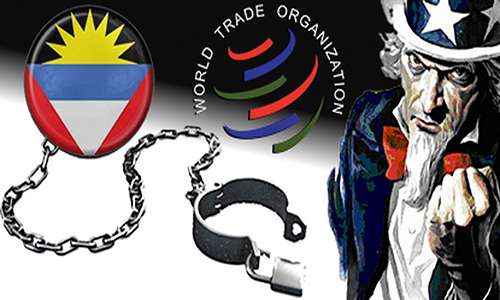
  • antigua-wto-uncle-samI spoke this week at a fringe meeting of the World Trade Organisation’s (WTO) annual forum in Geneva. The Democracy Institute, a public policy think-tank based in Washington DC and London, launched a report titled “Do as I say, not as I do” into a 14-year old dispute between the United States and the tiny Caribbean nation of Antigua & Barbuda. I was invited to attend as a panel member to explain why free trade and the integrity of the WTO is so important, and why the current US position regarding compliance with WTO rulings puts at risk the entire international order of trade arbitration. You can see the discussion here.
    The issue revolves around America’s suggestion that Antigua’s sizeable online gambling industry threatens the morals of US citizens.  I have never been to Las Vegas, but I believe they have a bit of a thing for casinos there, so I was intrigued at their stance.

    In 2003 online gambling overtook tourism as the main revenue driver for Antigua. For a nation of barely 70,000 people that is a big deal. Added to which, half the world’s online gamblers, in an industry worth US$10 billion, are American. The Cato Institute, a libertarian think-tank, believes US authorities have tried to snuff out the industry in Antigua more from a desire to protect the domestic market than from a concern about morality.

    The US had relied on the 1961 Wire Wager Act, designed to stop gambling money won by bets placed over the telephone, crossing state or international lines. But the world has moved on since then and the internet, as if jockeyed by Frankie Dettori, has ridden a coach and horses through that piece of legislation. It is no longer relevant, but is a convenient ace up the sleeve for US authorities.

    So in 2003 Antigua took the case to the arbitration panel of the WTO. No sooner had Antigua won the case when the US, employing the bureaucratic equivalent of a croupier’s chummy shuffle, appealed and threw up a myriad reasons why it need not change policy. The WTO looked at it again in 2007 and found in Antigua’s favour for a second time. Once more, the US continued to do nothing. Antigua, recently devastated by Hurricane Irma, is still out of pocket by, at the government’s estimate, US$3.44 billion (against a GDP of US$1 billion).

    The broader concern is what the case says about America’s attitude towards the WTO. Antigua’s beef started under President George W Bush and extended through Barack Obama’s tenure, so this is not party political. In some respects Donald Trump’s administration has actually sought to resolve aspects of the case in ways his predecessors never did. But by so obviously flouting WTO judgements – whilst seeking redress through the same systems for alleged bad behaviour by China, for example – the actions by the United States serve only to undermine the credibility of the organisation as a whole.

    Added to which is the US policy towards the WTO’s court of appeal. It is supposed to have seven judges but currently has only five, and by the end of the year could be down to four. A further three are due to retire by 2019. The US refuses to engage with the process of electing new judges, hoping to cajole the WTO into adopting a more US-friendly attitude. With any judgement needing three panel members it is a distinct possibility the WTO’s remit of international arbitration will be simply impossible to carry out in the very near future. That is unlikely to be allowed to happen, but America’s action is widely seen as attempting to hold the WTO to ransom; hardly an endearing quality in the world’s economic superpower.

    The WTO consists of 164 nations, but without the moral and political backbone of the United States, what reason is there for other members to abide by any rules they don’t like? This case has global ramifications. Little old hurricane-smashed Antigua is still fighting to highlight US hypocrisy and seek redress. Even when the chips are down.


  • hussain_imageWhat’s more surprising: that a narcissistic if charismatic recruiter for Islamic State (IS), known to the security authorities, was allowed to operate freely, to the point a young convert was killed in Syria, or that he allowed himself to be filmed by a journalist for years, seemingly untroubled that he was gifting material to his eventual prosecutors?
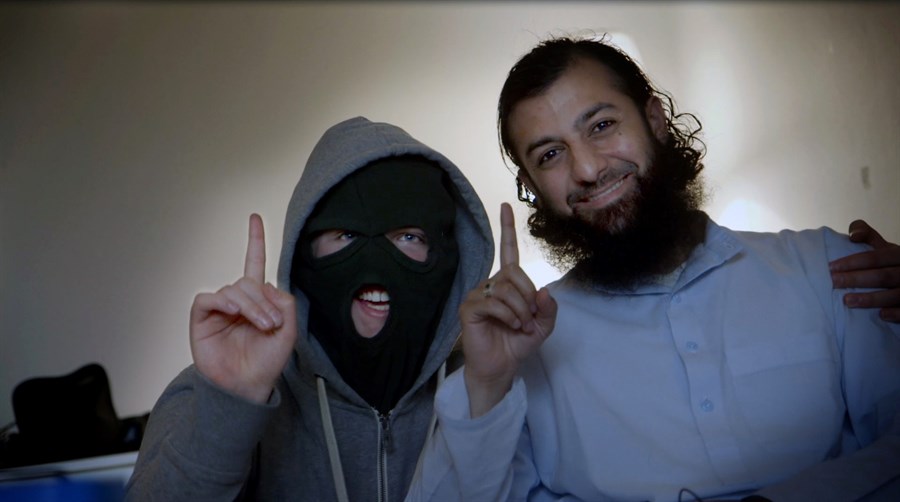
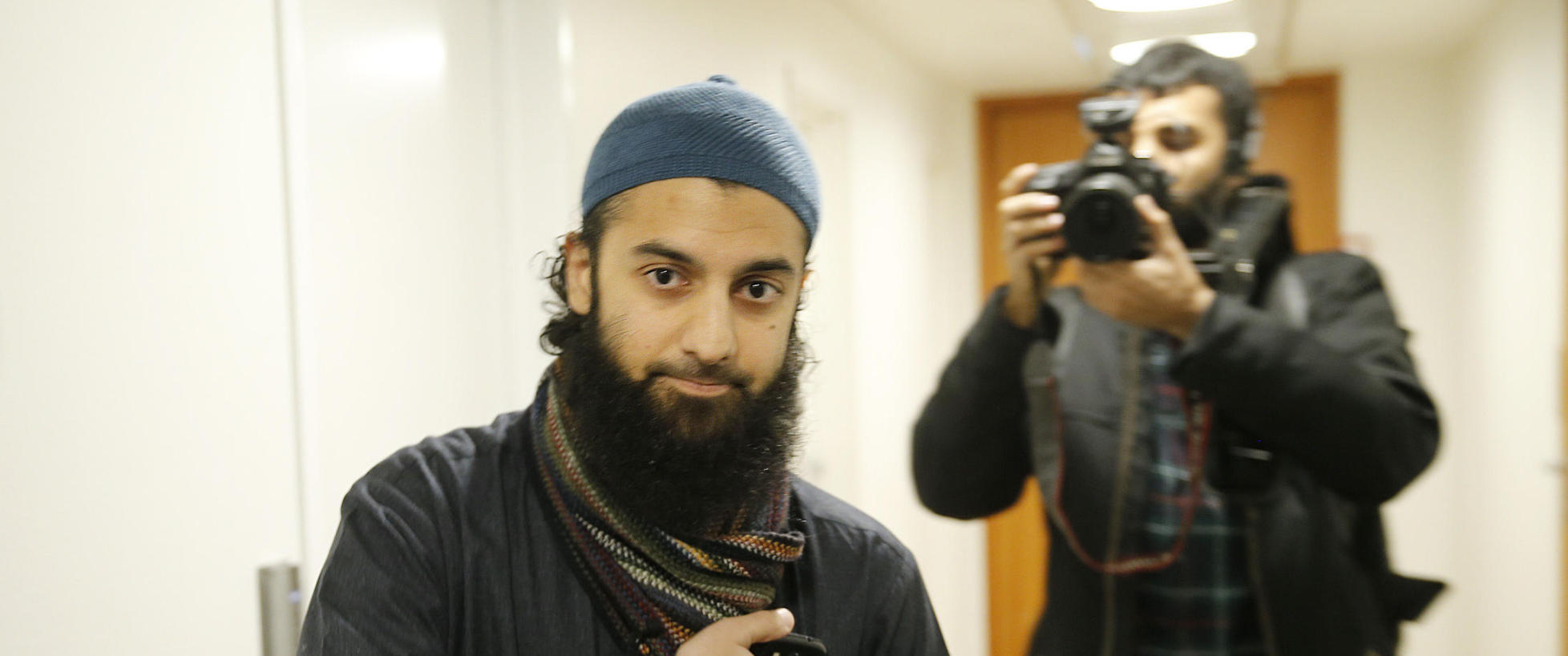
    Based in Norway, the film in question, Recruiting for jihad by producer and director Ulrik Rolfsen (that I had the great privilege of helping out on), has just been released. It made its international debut at the HotDocs documentary festival in Toronto on April 30th and has been well received. For three years Mr Rolfsen and fellow journalist Adel Farooq followed jihadist missionary and Norwegian citizen Ubaydullah Hussain, who was jailed on April 4th for nine years for supporting IS and grooming recruits.

    The film shows Mr Hussain arranging for a number of Norwegian men to travel to Syria and Iraq for what he describes as humanitarian work. He consistently denied he was an IS recruiter but clearly delighted in the group’s existence and purpose. “No country, apart from IS, is ruled by the laws of Allah,” he says, “I’m happy that we finally have a country where we can practice Islam and live by the laws of Allah.”

    We see him travelling to Denmark to pray over the grave of the 22-year old gunman killed by police in Copenhagen after he shot into a café that was hosting a meeting on free speech. He murdered one person and injured three more. “What do you think about what he did?” a Swedish journalist asks Hussain’s associate at the graveside. “Well what do you think about what is going on in Israel?” comes the reply.

    The film is full of such obfuscations and contradictions. But underneath is the steady drumbeat of hatred and division. “It’s very important to have a community where you belong,” he explains at one point, to a potential recruit, “you’ll never feel at home in this country or this society.” Five weeks after being filmed handing out leaflets in Oslo, Norwegian convert Thom Alexander Karlssen was killed in Syria fighting for IS in March 2015. Hussain had bought his ticket out from Oslo.

    The film shows that in 2014 Hussain visited Britain and met with Anjem Choudary and a number of associates. Among them was Brunsthom Ziamani (convicted shortly afterwards of planning the beheading of a British soldier), Siddhartha Dhar, also known as Abu Rumaysah and Mohammed Reza Haque, known as The Giant. Dhar and Haque subsequently went to fight for IS in Syria and have featured in images posted online of prisoner executions (they have both, at various times, been dubbed ‘Jihadi John 2’).

    ulrik_image

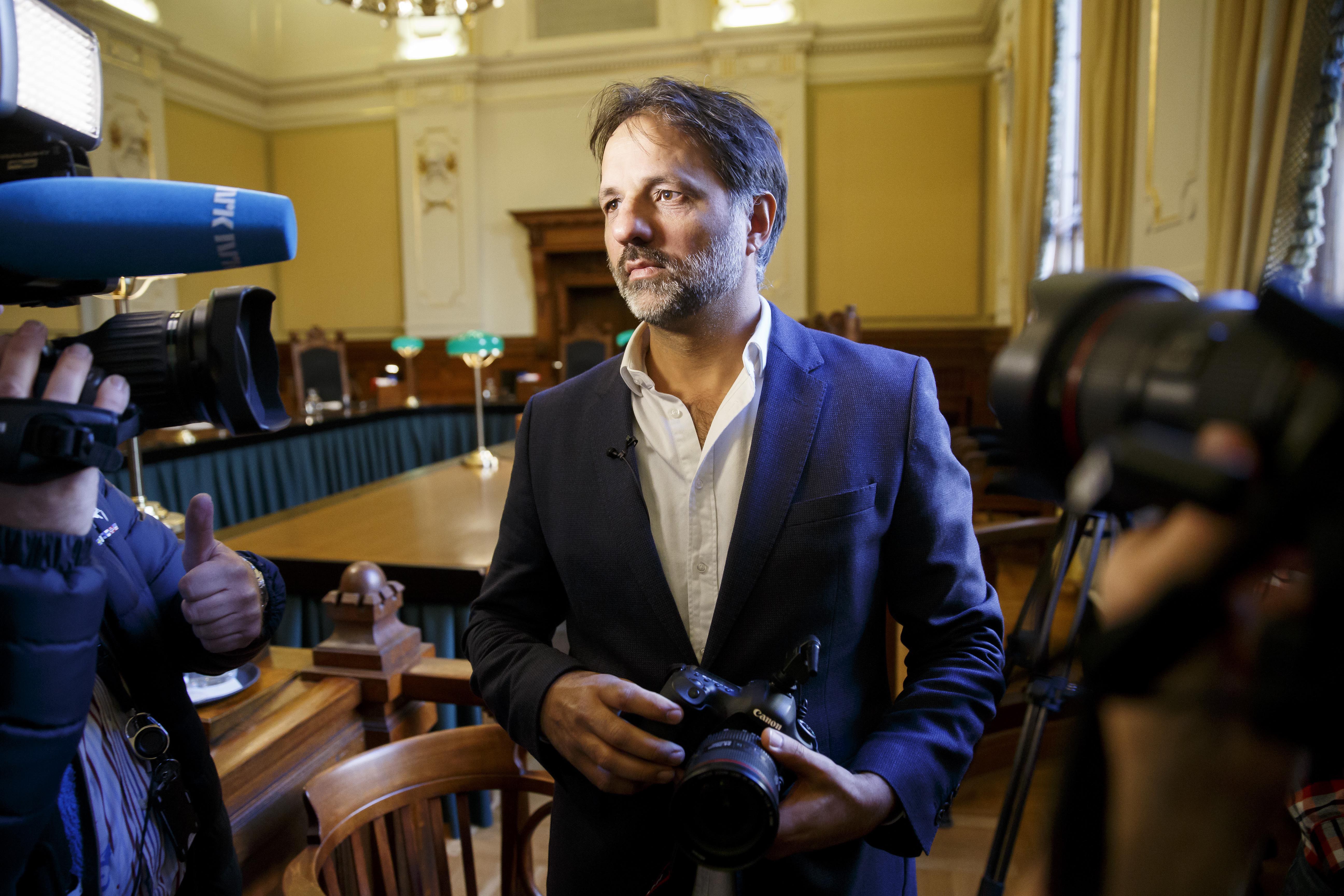
    In a bizarre twist, Mr Rolfsen’s home was raided by Norwegian security officials as he filmed Hussain and his material was seized. Benedicte Bjørnland, Head of Police Security Service in Norway, said they had compelling reasons to believe Mr Rolfsen’s material included proof of the intention of an 18-year old we meet as ‘Peter’ to travel to Syria to join IS (as well as other material).

    However, as Frithjof Jacobsen, a security commentator countered, “if the police don’t have evidence to imprison this 18-year old without confiscating material from people who make documentaries, then they have a problem”.

    After a number of legal challenges the Norwegian Supreme Court ruled that Mr Rolfsen did not have to reveal his sources to the authorities. The presiding judge said that Mr Rolfsen’s film was “the essence of investigative journalism [and] addresses a central and urgent problem of society where the general public and authorities need to have knowledge and insight”. He said the protection of sources was “crucial to be able to make this film”.

    Mr Rolfsen saw the verdict as having wider importance. “It is very significant,” he said, “it means that we can work to uncover things in society. We have different roles. The police have their role. It’s their job to prosecute and I respect that. Our job is to expose things and enlighten the public.”

    The privacy debate is a live one right now, and in the UK the new Investigatory Powers Act, dubbed the Snoopers Charter, has been controversial. Mr Rolfsen’s film highlights the fine line police, prosecutors and journalists have to tread in this area: at what point does a journalists responsibility to society overrule that to his subject?

    We hear a lot about extremist recruiting these days. For anyone interested in understanding quite what that looks like I commend this film. As for why Hussain never travelled to Syria himself? “I’ve been exempted from carrying out jihad,” he says just before his arrest. “I have a chronic illness and in my state of health I can’t go on long trips.”

    Recruiting_for_Jihad_image

    ‘Peter’ was arrested by Swedish police trying to board a plane in Gothenburg bound for Turkey. He was convicted of trying to join a terrorist organisation and sentenced to two years and ten months.